How do I differentiate between documentary and reality television?
To me, the purpose of a documentary is to educate, and the purpose of reality TV is to entertain. Both do both. And education could arguably be entertainment. But the entertainment of reality TV, to me, is that of generic enjoyment, heedless of how much attention you have to pay.
The other way is that the participants of reality tv more often than not win a prize, or one of them does. Participants of documentaries don’t.
How does Hill define reality TV?
Hill talks about how different audiences define reality tv differently. And within the genre of reality tv, that there are so many subgenres. This means the lines grow fuzzy and it begins to get more complicated defining what is a broad range of reality television programming.
Much of television today is a result of hybridizing different genres together. It was the same last week with Buffy, and is the same for reality television.
Hill concludes that there is no one definition of reality programming, rather many competing definitions of what has become the reality genre.
Hill says that if there is one defining characteristic that unites all the programmes that make up reality television, it is the capacity to let viewers see for themselves.
How has the documentary genre influenced reality TV and how it presents the ‘real’?
Everyone has a bias. It is impossible to present something in an unbiased way, even if you think you are. So even in documentaries, where the creators might be trying to show the truth of a subject, their point of view, the shots they use, all create their bias.
It seems to me that the documentary genre influenced reality TV by conceiving the idea of taking this bias further, and for a more simple form of entertainment.
The power of how scenes come across is in the hands of the editor. And the job of the editor is to create a show that will sell. So while on the one hand, a room filled with people talking nicely to each other could be real, he could manipulate it so that the real looks a lot more awkward, thus creating drama. His bias is to get numbers.
Documentaries started this off, and influenced what could be the start of reality TV, just like in the “Cathy Come Home.” Cathy Come Home was presented in a realistic drama documentary style. It followed a couple who had a child, then due to the husbands injuries, are evicted and become squatters. Eventually they lost their children to social services.
The ‘reality’ way it is filmed makes it believable, but in fact it is a written play. Cathy Come Home seems to be a middle ground between documentary and reality tv. Everything is scripted. It is just presented like reality.
Genres are a never ending train of influencing to each other. That’s why, every week of popular genres, it has been difficult to completely define what is each separate genre.
Friday, October 19, 2012
Thursday, October 18, 2012
Week 10 - Che Crawford - Cult TV
I firstly should tell you that I haven’t watched these episodes. This might not be very understandable, but I just hate watching things with demons etc in it. But instead I have read the plot synopsis for each episode, and Buffy as a whole, to better answer these questions :)
Wilcox and Lavery (2002) identify 9 defining characteristics of ‘quality TV’ – can you apply any of these to other television series that you have viewed recently? Are there any other characteristics that you could add to their list?
1. “Quality TV usually has a quality pedigree.”
2. “Quality shows must often undergo a noble struggle against profit mongering networks and non appreciative audiences.”
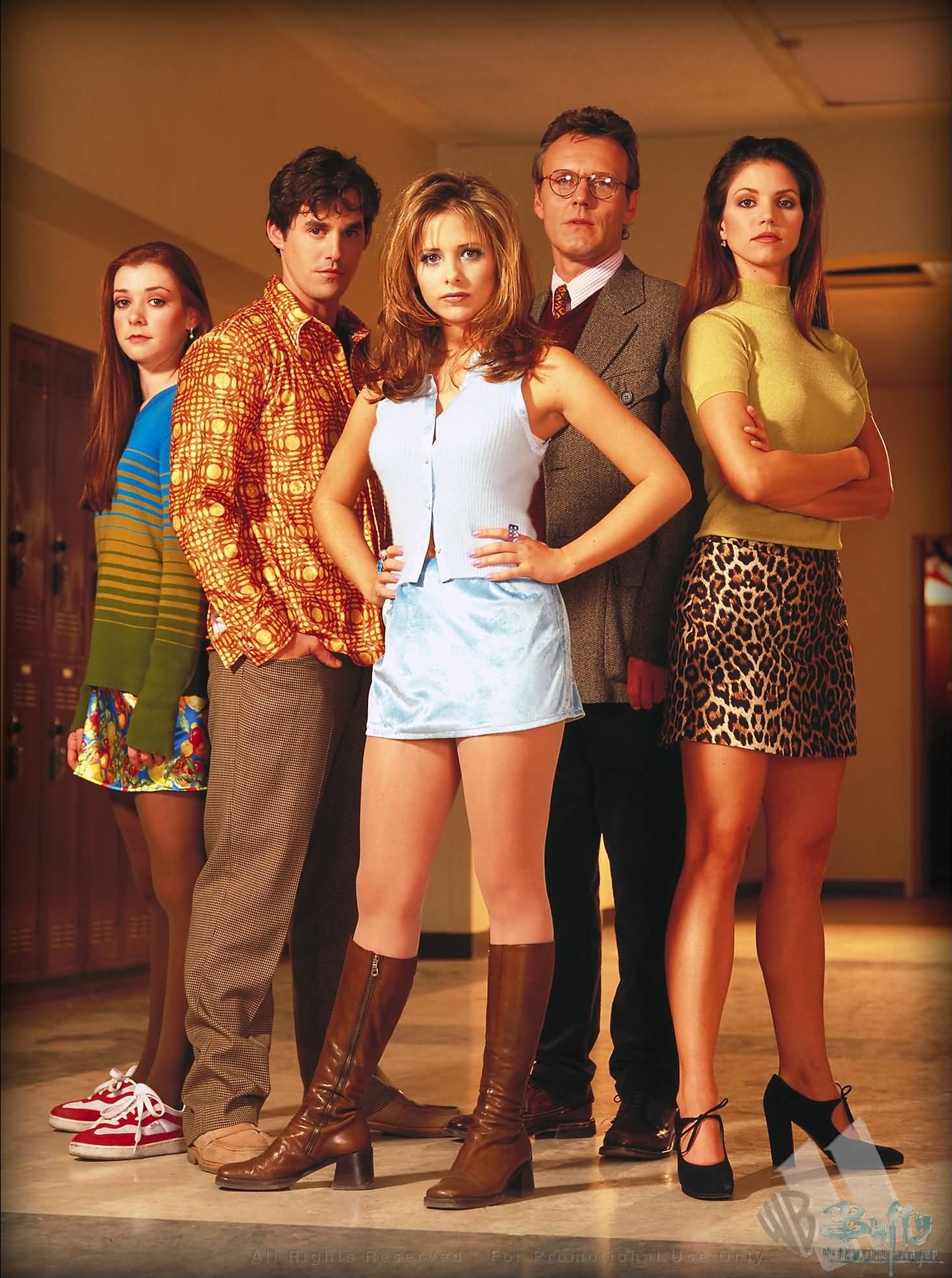
3. “Quality TV tends to have a large ensemble list.” The core of ‘Buffy’s’ ensemble being five friends, plus many more additional.
4. “Quality TV has a memory.” The characters remember things that have happened in past episodes.
5. “Quality TV creates a new genre by mixing old ones.” In the case of Buffy, it tends to be a mix of daytime soaps, gothic romances, B-grade horror films, and supernatural fantasies.
6. “Quality tv tends to be literary and writer based.” Whelden compared working on Buffy to working on an ongoing novel.
7. “Quality TV is self conscious.” Buffy often refers to other cultural text like Xena, or Pink Floyd.
8. “The subject matter of quality TV tends toward the controversial.” For example, Willow’s turn toward lesbianism.
9. “Quality TV aspires toward ‘realism’.” In Buffy’s case, emotional realism is what comes across, with comments from people on how they can relate to what the characters are going through.
And for me personally, I would add -
10. Quality TV means something. It’s more than just entertainment. The subtext should be filled with morals, metaphors, for sights and so on.
Whedon explained, "We think very carefully about what we're trying to say emotionally, politically, and even philosophically while we're writing it... it really is, apart from being a pop-culture phenomenon, something that is deeply layered textually episode by episode." (Shuttleworth, I, 2003).
For example in “Goodbye Iowa,” the boy is playing with a cyborg soldier action figure in the park, shortly before Adam - a genuine cyborg - kills him.
One of my current favourite shows that I think this list applies to is “Fringe.” Fringe is science fiction show that focuses on investigating the unexplained, which are related to the mystery of a parallel universe. It has a large cast, the reception of fringe was originally lukewarm but has since grown, it often refers back to past episodes, and the motivations of the characters feel very real to me. It ticks all the boxes, and I think is fantastic quality TV.
How does Buffy deconstruct traditional literary notions of good and evil?
The conflict between good and evil is one of the most common conventional themes in literature, and is sometimes considered to be a universal part of the human condition. The story of Buffy seems to be good (humans) vs bad (demons and vampires). But Buffy deconstructs traditional literary notions by it not being that simple. There are bad humans, and good demons and vampires.
For example, in “The I in Team,” Professor Walsh sets Buffy up to die by trapping her in a sewer with two demons she had previously seen anesthetized in the Initiative's facility. Professor Walsh is later killed by Adam.
Another example would be the character Angel, a vampire who had been cursed with a soul. Angel starts out as a reluctant hero who stayed in the shadows, and ended up a dark, flawed, yet altruistic champion of mankind, seeking to voluntarily atone for his sins.
Buffy has a relationship with Angel, the vampire, the kind of creature that she kills. This in itself breaks down the traditional literary notions of good and evil. Buffy shows us that there is no ‘good’ and ‘evil,' there are just many variations in between. Life is not that simple, and Buffy doesn’t attempt to make so.
This is again reinforced in the spin off that Angel gets called “Angel” that is filled with good demons.
References
Shuttleworth, I. (2003). Bite me, professor. Financial Times, citing interview from The New York Times. Retrieved from http://www.whedon.info/article.php3?id_article=1567&img=%3E
Wilcox and Lavery (2002) identify 9 defining characteristics of ‘quality TV’ – can you apply any of these to other television series that you have viewed recently? Are there any other characteristics that you could add to their list?
1. “Quality TV usually has a quality pedigree.”
2. “Quality shows must often undergo a noble struggle against profit mongering networks and non appreciative audiences.”
3. “Quality TV tends to have a large ensemble list.” The core of ‘Buffy’s’ ensemble being five friends, plus many more additional.
4. “Quality TV has a memory.” The characters remember things that have happened in past episodes.
5. “Quality TV creates a new genre by mixing old ones.” In the case of Buffy, it tends to be a mix of daytime soaps, gothic romances, B-grade horror films, and supernatural fantasies.
6. “Quality tv tends to be literary and writer based.” Whelden compared working on Buffy to working on an ongoing novel.
7. “Quality TV is self conscious.” Buffy often refers to other cultural text like Xena, or Pink Floyd.
8. “The subject matter of quality TV tends toward the controversial.” For example, Willow’s turn toward lesbianism.
9. “Quality TV aspires toward ‘realism’.” In Buffy’s case, emotional realism is what comes across, with comments from people on how they can relate to what the characters are going through.
And for me personally, I would add -
10. Quality TV means something. It’s more than just entertainment. The subtext should be filled with morals, metaphors, for sights and so on.
Whedon explained, "We think very carefully about what we're trying to say emotionally, politically, and even philosophically while we're writing it... it really is, apart from being a pop-culture phenomenon, something that is deeply layered textually episode by episode." (Shuttleworth, I, 2003).
For example in “Goodbye Iowa,” the boy is playing with a cyborg soldier action figure in the park, shortly before Adam - a genuine cyborg - kills him.
One of my current favourite shows that I think this list applies to is “Fringe.” Fringe is science fiction show that focuses on investigating the unexplained, which are related to the mystery of a parallel universe. It has a large cast, the reception of fringe was originally lukewarm but has since grown, it often refers back to past episodes, and the motivations of the characters feel very real to me. It ticks all the boxes, and I think is fantastic quality TV.
How does Buffy deconstruct traditional literary notions of good and evil?
The conflict between good and evil is one of the most common conventional themes in literature, and is sometimes considered to be a universal part of the human condition. The story of Buffy seems to be good (humans) vs bad (demons and vampires). But Buffy deconstructs traditional literary notions by it not being that simple. There are bad humans, and good demons and vampires.
For example, in “The I in Team,” Professor Walsh sets Buffy up to die by trapping her in a sewer with two demons she had previously seen anesthetized in the Initiative's facility. Professor Walsh is later killed by Adam.
Another example would be the character Angel, a vampire who had been cursed with a soul. Angel starts out as a reluctant hero who stayed in the shadows, and ended up a dark, flawed, yet altruistic champion of mankind, seeking to voluntarily atone for his sins.
Buffy has a relationship with Angel, the vampire, the kind of creature that she kills. This in itself breaks down the traditional literary notions of good and evil. Buffy shows us that there is no ‘good’ and ‘evil,' there are just many variations in between. Life is not that simple, and Buffy doesn’t attempt to make so.
This is again reinforced in the spin off that Angel gets called “Angel” that is filled with good demons.
References
Shuttleworth, I. (2003). Bite me, professor. Financial Times, citing interview from The New York Times. Retrieved from http://www.whedon.info/article.php3?id_article=1567&img=%3E
Tuesday, October 16, 2012
Week 11-12: Reality TV [Julie]
How does Hill define reality TV?
The definition Hill (2005) gave reality TV is “Reality TV is commonly used to describe a range of popular factual programming” although there is no single or concrete definition for this genre. That definition is more traditional and was commonly used in the past.
With the rise of current reality TV, it becomes more difficult to give reality TV a definite definition due to the different ideas the creators and the viewers have of the TV sub-genre. Hill (2005) continued to say “The term usefully merges factual programming with entertainment-based television, and highlights hybridization, a common generic feature of most reality programs”. This can be used to describe the more current types of reality TV such as game shows like Survivor and The Biggest Loser and drama reality TV shows like The Hills. These shows are considered ‘factual’, especially in US where the shows are created and produced where the audiences are able to have a voyeuristic view of other people’s lives as they go through ‘real’ situations. In contrast, audiences in the UK deems shows that deals with themes of current affairs or similar to documentaries as more ‘factual’ and defines reality TV as such. ‘Docudramas’ such as Cathy Come Home were much more watched in the UK and shook the nation because it dealt with real social issues that viewers of that time were actually living through. Although the portrayals of the characters in the show were over-dramatized and it was scripted, Cathy Come Home had a strong sense of what was ‘real’.
Reality TV creates a different close connection to the audiences compared to dramas or movies. In reality TV shows, we as the audience know that the people we are watching are ‘real’ people and not actors. Although we can understand when the ‘real’ people are acting in an over-dramatized manner, it still gives the audience a sense of ‘I could be that person’ feeling while watching reality TV. For shows such as The Hills, the audiences are able to go through the lives of the people in the show as if they are with them. Viewers are able to feel the emotions and the events in the lives of the characters and decide what is fact and what is scripted. Hill (2005) emphasized that the main point of reality TV is that the audiences are connected to the show and that “‘reality’ is connected with audience understanding of the performance of non-professional actors in the programs, and the ways ‘real people’ play up to the cameras”.
Ultimately, reality TV has no set definition. Only that it is an ever evolving genre of television set to entertain people by providing a voyeuristic window in the lives of ‘real people’.
Reference:
Hill, A. (2005) The reality genre. In A. Hill, Reality TV: Audiences and Popular Factual Television. (pp. 14 – 40). Oxon: Routledge.
Monday, October 15, 2012
Weeks 9-10: Cult TV (Isaac)
Wilcox and
Lavery (2002) identify 9 defining characteristics of ‘quality TV’ – can
you apply any of these to other television series that you have viewed
recently? Are there any other characteristics that you could add to
their list?
When looking at the 9 characteristics of quality television, and cult television programs in particular, one of my all-time favorite shows comes to mind: Battlestar Galactica (2004). I can't think of many other show that maintain such a high quality as Battlestar Galactica.
1. Quality TV has a pedigree.
Though only on for four seasons, Battlestar gained critical acclaim. Time magazine named in the best show of 2005, and went on to add it to their 100 best tv shows of all-time list.
"“Battlestar Galactica,” refreshingly, is as real as science fiction gets." (The New Yorker,2006)
"You can look at this saga any way you want—as political drama,
religious debate, psychological suspenser, sci-fi adventure, deep
metaphor or just plain fun—and it's scintillating from every angle." (Newsday, 2005)
2. Quality shows must undergo a noble struggle against profit-mongering networks and non-appreciative audiences.
Battlestar Galactica was originally planned for 5 seasons, but was cut down to 4 and canceled due to low audience numbers.
3. Quality TV tends to have a large ensemble cast
4. Quality TV has a memory
The song "All Along the Watchtower" is used throughout seasons 3 and 4, though can only be heard by four of the characters. The use of this song creates a connection between the characters, who are all part of the Final 5. Later in season 4 (ep. Crossroads, Part II) it's revealed that one of the character's was a musician in a past life, and actually wrote the song.
Further on they discover that the notes in the song actually hold the secret to Earth's location.
Additionally, lyrics from the song were included in the dialogue of one episode.
- Saul Tigh: "I know, I know. I can't quite understand it myself. There's too much confusion."
- Saul Tigh (to self, after Adama exits): "There must be some kinda way out of here."
- Tory Foster (while washing her hands): "I can't get no relief."
5 Quality TV creates a new genre by mixing old ones
"In addition to the space opera and first contact, BSG
activates both hard and soft sf. The turn towards harder sf, and away
from the traditional adventure focus of the space opera, can be seen in
the concentration and explanation of technological devices throughout
the episode, even if they remain mostly secondary to the plot. Soft,
or social, sf can be seen in the concentration of contemporary
political and social issues discussed on the show, from abortion to
population control, the death penalty and treatment of prisoners, to
the unionization of mine workers, which is a carry over from Ron D.
Moore’s days on the Star Trek franchise, which has always had a history of using the show to address such issues." (Stephen, 2012)
6. Quality TV seems to be literary and writer-based
Battlestar contains many religious and mythological references throughout, such as Mormonism, Hinduism, and the Greek Zodiac. It has also been suggested that the basic plot outline is based upon Virgil's Aeneid, a Roman epic poem. (Higgins, 2009)
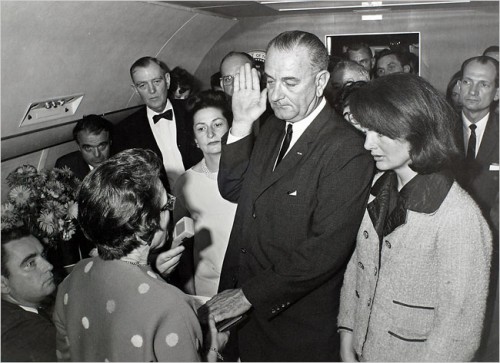
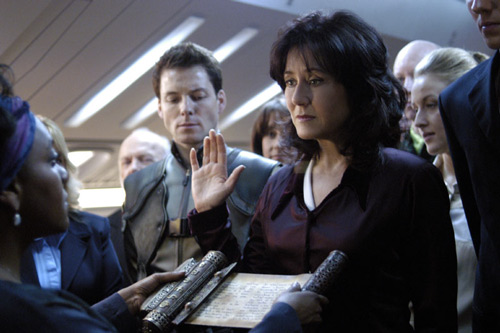
Also, the swearing in of President Roslin mimicked that of the famous image of Lyndon Johnson being sworn in aboard Air Force One.
7. Quality TV is self-conscious
Chief Tyrol’s pro-union speech in “Lay Down Your Burdens” is a partial paraphrase of Mario Savio’s 1964 speech at the Berkeley Free Speech Movement. (Frarrier, 2011)
The song "All Along the Watchtower", by Bob Dylan, is claimed to be written by one of the characters in a past life. During the epilogue of the finale, Jimi Hendrix's famous cover version can be heard playing from a radio.
8. The subject matter of quality TV tends towards the controversial.
Battlestar deals with serious issues such as, the war on terror, suicide bombings, religious fundamentalists, cults, racism, and torture. The UK newspaper The Guardian stated: "Battlestar Galactica is the only award-winning drama that dares tackle the war on terror" (Martin, 2007).
9. Quality TV aspires towards realism.
"a ripping sci-fi allegory of the war on
terror, complete with religious fundamentalists (here, genocidal robots
called Cylons), sleeper cells, civil-liberties crackdowns and even a
prisoner-torture scandal." (Poniewozik, 2005)
References:
http://tv.nytimes.com/2008/04/04/arts/television/04gala.html?_r=0&adxnnl=1&adxnnlx=1350095907-sbqU7ZqxSg9KHiNyZMcHAA
http://entertainment.time.com/2007/09/06/the-100-best-tv-shows-of-all-time/#battlestar-galactica-2
http://en.battlestarwiki.org/wiki/The_Music#cite_note-2
http://www.16-9.dk/2012-06/side11_inenglish.htm
http://www.guardian.co.uk/culture/charlottehigginsblog/2009/feb/24/classics-classics
http://www.neatorama.com/2011/11/30/11-facts-you-might-not-know-about-battlestar-galactica/
http://www.guardian.co.uk/media/2007/jan/13/tvandradio.broadcasting
http://www.time.com/time/arts/article/0,8599,1141640,00.html
Weeks 11 and 12 Reality TV
How has the documentary genre influenced reality TV and how it presents as "real"?
One of the first documentary style films released was Ken Loach's "Cathy Come Home" that was broadcast on the BBC back in 1966. Cathy Come Home is a docu-drama, meaning it is still a film with actors and scripted events, although it tackled a very serious situation that was happening in Great Britain at the time. Many families were left homeless because after World War II, the country didn't build enough homes for its growing population and many fathers and husbands were left unemployed and their families had no where else to live.
Ken Loach (Cathy Come Home's director) used many film techniques and presentation to present what was happening on-screen as "real" As Hill (2005) states, reality TV uses are variety of techniques such as "non-professional actors, unscripted dialogue, surveillance footage, hand-held cameras and seeing events unfold as they are happening in front of the camera".
Many of these techniques were used in Cathy Come Home to make it look like everything that was happening appear to be real. The great way Ken Loach approached this documentary-drama was the use of "passing of time". To make Cathy Come Home appear more real to the viewer was that filming actually took place on location in Britain over a period of 18 months as said in the ending credits. It wasn't as if everything was shot in a studio over a period of 3 - 4 months like most films are made. Some of the events in Cathy Come Home were improvised and unscripted too. According to the BBC (2011), many "scenes were improvised, and some include unknowing members of the public, such as the final scene in which Cathy's children are taken from her in a railway station (none of the passers-by intervened)"
Another technique that was used often in Cathy Come home was the prevalent use of narration. Cathy would always update the viewer of her grim situation during the course of the film. Another voice-over (which was usually a real-life news report) would also highlight how families are struggling in Britain right now. I remember hearing in the film that Germany were able to build more houses for its people after World War II than Britain. This is an amazing stat considering Germany was on the losing end of World War II unlike Britain...Obviously, Cathy Come Home makes use of a lot of close-ups and hand-held camera too.
Cathy Come Home could be described as a pioneer in Reality TV film techniques as many of the elements seen in this are used in Reality TV shows we see broadcast today. Narration is somewhat been "changed" to show people confessing in front of the camera instead. Confessions are used in lot of competition style shows such as "Survivor" and "Hell's Kitchen" just to name a few.
Another thing I felt Cathy Come Home introduced to the Reality TV genre is the use of the "unknown public". Many reality-based TV shows now use the public to either shock or ridicule them on camera for humorous or entertaining purposes. A show called Candid Camera uses this to play pranks on unsuspecting members of the public. This technique is still being used as shows like Jackass and NZ's Jono and Ben at Ten use this as well.
The only thing that Cathy Come Home did use that many Reality TV shows don't use is the use of professional actors. Many Reality TV shows nowadays make contestants "audition" for a spot on a TV show just so they can be on TV. Some of these people aren't paid or either paid little in comparison to using actual actors. Reality TV has become popular among TV networks mainly because it is cheaper to produce than say an original 1 hour action TV show.
References:
BBC World Service: Witness: Cathy Come Home, November 16, 2011
Hill, A. (2005) The reality genre. In A. Hill, Reality TV: Audiences and Popular Factual Television. (pp. 14 – 40). Oxon: Routledge.
One of the first documentary style films released was Ken Loach's "Cathy Come Home" that was broadcast on the BBC back in 1966. Cathy Come Home is a docu-drama, meaning it is still a film with actors and scripted events, although it tackled a very serious situation that was happening in Great Britain at the time. Many families were left homeless because after World War II, the country didn't build enough homes for its growing population and many fathers and husbands were left unemployed and their families had no where else to live.
Ken Loach (Cathy Come Home's director) used many film techniques and presentation to present what was happening on-screen as "real" As Hill (2005) states, reality TV uses are variety of techniques such as "non-professional actors, unscripted dialogue, surveillance footage, hand-held cameras and seeing events unfold as they are happening in front of the camera".
Many of these techniques were used in Cathy Come Home to make it look like everything that was happening appear to be real. The great way Ken Loach approached this documentary-drama was the use of "passing of time". To make Cathy Come Home appear more real to the viewer was that filming actually took place on location in Britain over a period of 18 months as said in the ending credits. It wasn't as if everything was shot in a studio over a period of 3 - 4 months like most films are made. Some of the events in Cathy Come Home were improvised and unscripted too. According to the BBC (2011), many "scenes were improvised, and some include unknowing members of the public, such as the final scene in which Cathy's children are taken from her in a railway station (none of the passers-by intervened)"
Another technique that was used often in Cathy Come home was the prevalent use of narration. Cathy would always update the viewer of her grim situation during the course of the film. Another voice-over (which was usually a real-life news report) would also highlight how families are struggling in Britain right now. I remember hearing in the film that Germany were able to build more houses for its people after World War II than Britain. This is an amazing stat considering Germany was on the losing end of World War II unlike Britain...Obviously, Cathy Come Home makes use of a lot of close-ups and hand-held camera too.
Cathy Come Home could be described as a pioneer in Reality TV film techniques as many of the elements seen in this are used in Reality TV shows we see broadcast today. Narration is somewhat been "changed" to show people confessing in front of the camera instead. Confessions are used in lot of competition style shows such as "Survivor" and "Hell's Kitchen" just to name a few.
Another thing I felt Cathy Come Home introduced to the Reality TV genre is the use of the "unknown public". Many reality-based TV shows now use the public to either shock or ridicule them on camera for humorous or entertaining purposes. A show called Candid Camera uses this to play pranks on unsuspecting members of the public. This technique is still being used as shows like Jackass and NZ's Jono and Ben at Ten use this as well.
The only thing that Cathy Come Home did use that many Reality TV shows don't use is the use of professional actors. Many Reality TV shows nowadays make contestants "audition" for a spot on a TV show just so they can be on TV. Some of these people aren't paid or either paid little in comparison to using actual actors. Reality TV has become popular among TV networks mainly because it is cheaper to produce than say an original 1 hour action TV show.
References:
BBC World Service: Witness: Cathy Come Home, November 16, 2011
Hill, A. (2005) The reality genre. In A. Hill, Reality TV: Audiences and Popular Factual Television. (pp. 14 – 40). Oxon: Routledge.
Saturday, October 13, 2012
Weeks 9 & 10: Cult TV
What role does Hills (2004) suggest the fans play in the construction of cult TV? How is new media central to this?
According to Hills (2004), fans play a huge part in the constrution of cult tv shows more than in any other TV genre. It is assumed that Cult TV shows are "created by fans rather than by media producers" (Hill, 2004). Meaning that these shows are created solely for the purposes of the entertainment needs of a specific audience and not for profit or advertisers to please the masses like we often see such as the plethora of talent-type TVs hows like X-Factor, American Idol etc.Fans' dedication to Cult TV shows may even allow the TV show to come back from being cancelled or even warrant a movie to be released. When a specific TV show might be cancelled or is off-season, the show's cult-like status still lives on online via discussion blog and fan fiction that is created by fans online.
One of the best examples of this is Joss Whedon's TV show called "Firefly". That show only lasted for only 11 episodes and many fans were disappointed that the Fox network didn't bother to renew the series for a second season. Firefly's demise became somewhat more of a success when it was released on DVD. The DVD sold over 200,000 copies that "Universal green-lit a small-budget movie, to be written and directed by Whedon" (Russell, 2005) himself. This movie was became Serenity as a result of this which was released in 2005 and became somewhat of a critical success, but didn't become a big enough Box Office hit to warrant a sequel. Still, had it not been for the passionate fans, Firefly would not have had the movie Serenity in the first place, although this hasn't stopped fans to this day petitioning for a second movie to be made...
The same can hold true for Buffy too. It was cancelled from its original channel (WB) after season 5. Although the show averaged around 4.5 million viewers per episode, WB did not think this was high enough to justify paying more than $1.8 million per episode on the series. UPN saw the potential in Buffy's popularity and Buffy moved onto the new station (along with Angel as well) for a further 2 seasons.
Buffy initially reached its "cult like" status due to its unique themes and content it includes over more other mainstream television shows out there. In the episode "The I in Team" we get to witness the first female attraction between the characters of Willow and Tara since Willow feels Buffy is spending too much time with her boyfriend and his commando mates. This was the start of a lesbian relationship that reached its peak in the fifth season in an episode called "The Body" when Willow and Tara finally kissed. The show even aired the first ever lesbian sex scene ever before on network television.
References:
Hills, M. (2004). Defining Cult TV; Texts, Inter-texts and Fan Audiences, The Television Studies Reader, in R. C. Allen & A. Hill. London and New York: Routledge.
Russell, M. (2005). The Browncoats Rise Again. Retrieved October 2nd, 2012, from http://www.weeklystandard.com/Content/Public/Articles/000/000/005/757fhfxg.asp
Monday, October 8, 2012
Week 8 - Che Crawford - Science Fiction
What is the difference in emphasis between the terms science fiction and speculative fiction? Which is The Man in the High Castle?
Science fiction is a genre of writing categorised by it’s inclusion of surreal elements outside the norm such as;
While opinions differ on the exact separation of Speculative and Science fictions, if there is to be any, a common opinion is that Speculative fiction takes place under a ‘What if’ scenario that follows with a strict adherence to scientific law.
‘The Time Machine’ by H.G Wells is a good example of this idea because the story begins with the surreal time machine and the continuing story restricts itself to reality.
The problem with that idea is that much of science fiction also falls under the idea of a ‘What if’ scenario, but also some works classified ‘Science fiction’ have very little to do with the Genre. If fiction was to be pigeon holed for their every little difference, I am sure that Speculative fiction would be it’s own genre with elements overlapping science fiction, but as it is, Speculative fiction can be considered a subgenre of Science Fiction.
Dick’s novel, ‘Man in the High Castle’, tells the story of ‘modern day’ (1962) life under the totalitarian rule of Axis power after the Allied Forces fail to win World War 2. It is a fascinating novel with a well thought out plot and immense subplots. It even has a fascinating story within a story that tells of the opposite Allied forces success. It is a literary classic like many of Dick’s novels but unlike many of his novels it lacks robots, futuristic machinery or alternate time settings.
The novel rewrites some minor yet important historical factors which set in motion a complete change in history, but does so without any ‘fantastic’ notions. The reality the story takes place in is entirely normal with only a different history and continued different present.
The only ‘Science Fiction’ element in the story is the fact that it can be considered ‘Speculative Fiction’ and Speculative Fiction is a subgenre of Science Fiction.
Science fiction is a genre of writing categorised by it’s inclusion of surreal elements outside the norm such as;
- A time setting e.g. The future or alternate past.
- A spatial setting such as outer space or on subterranean earth.
- Characters that include robotic life and extraterrestrials.
- Technology that is futuristic such as weapons, teleportation, transportation and advanced computers.
- Scientific principles that are new or that contradict known laws of nature for example time travel, wormholes, or faster-than-light travel.
- New and different political or social systems such as ‘Dystopian’, ‘Post Scarcity’ and ‘Post Apocalyptic’
- Other universes or dimensions and travel between them.
While opinions differ on the exact separation of Speculative and Science fictions, if there is to be any, a common opinion is that Speculative fiction takes place under a ‘What if’ scenario that follows with a strict adherence to scientific law.
‘The Time Machine’ by H.G Wells is a good example of this idea because the story begins with the surreal time machine and the continuing story restricts itself to reality.
The problem with that idea is that much of science fiction also falls under the idea of a ‘What if’ scenario, but also some works classified ‘Science fiction’ have very little to do with the Genre. If fiction was to be pigeon holed for their every little difference, I am sure that Speculative fiction would be it’s own genre with elements overlapping science fiction, but as it is, Speculative fiction can be considered a subgenre of Science Fiction.
Dick’s novel, ‘Man in the High Castle’, tells the story of ‘modern day’ (1962) life under the totalitarian rule of Axis power after the Allied Forces fail to win World War 2. It is a fascinating novel with a well thought out plot and immense subplots. It even has a fascinating story within a story that tells of the opposite Allied forces success. It is a literary classic like many of Dick’s novels but unlike many of his novels it lacks robots, futuristic machinery or alternate time settings.
The novel rewrites some minor yet important historical factors which set in motion a complete change in history, but does so without any ‘fantastic’ notions. The reality the story takes place in is entirely normal with only a different history and continued different present.
The only ‘Science Fiction’ element in the story is the fact that it can be considered ‘Speculative Fiction’ and Speculative Fiction is a subgenre of Science Fiction.
Subscribe to:
Posts (Atom)